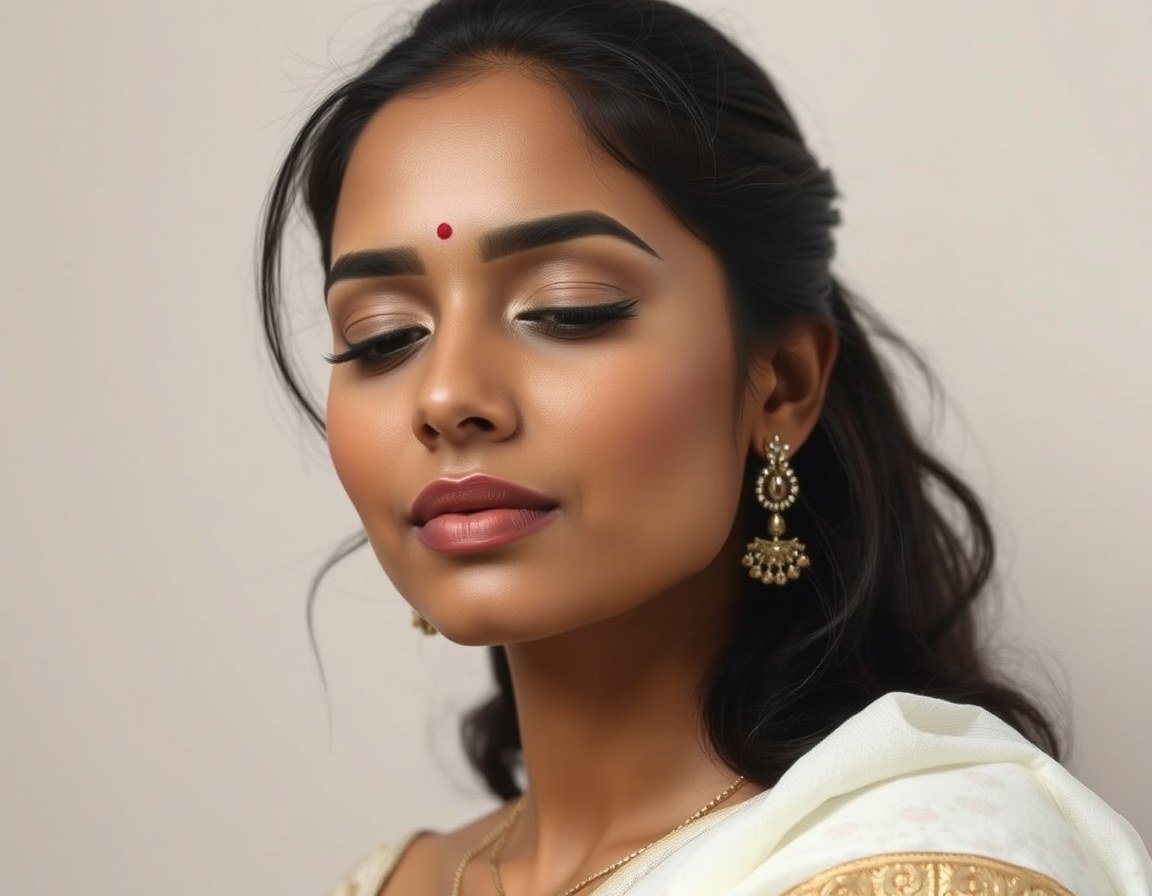
She was sitting in the chair by the mirror, half her face done, the other half bare, and she asked it the way people ask things they’ve been chewing on for weeks. Not about the course fee. About the trial. Whether she should book one, attend one, or just start learning and figure the rest out later.
I told her what I tell everyone who asks me this. The trial is not the beginning. It’s the end of a longer thought. If you do it too early, you’ll spend three hours watching someone work and come home more confused than when you left. I’ve seen it happen. I’ve done it myself, years ago, sitting in on a senior artist’s bridal booking in Jayanagar and understanding maybe a third of what she was doing and why.
The short version
A trial teaches you nothing if you don’t already know what you’re looking at. Learn the base first. Then watch. Then assist. A bridal makeup trial in Bangalore is a finishing step, not a starting one, whatever the internet tells you.
Most people skip this, but it’s the most useful thing I can tell you. You should wait if you have never held a brush on another person’s face. Not your own. Someone else’s. Because your own face is muscle memory you built without noticing, and it will lie to you about how easy this work is.
You should also wait if you’re joining only because you’re bored or between jobs. Bridal work in Bangalore means being awake at 3am for a 6am muhurtham. Most weddings here run on that window. If the idea of leaving home at 2:45am in the cold makes you tired just reading it, this is not the work for you.
And you should wait if you can’t afford to do it without immediate returns. The first few months after any course are slow. You’re building a kit, doing free faces for friends, learning what holds up in Bangalore humidity by August afternoon. That phase is real and it doesn’t pay.
A homemaker from Koramangala joined one of my batches at 41. She told me on day one that she was too old for this. She now takes weekend bookings and turns work away. But she also waited. She’d been practising on family for a year before she walked in.
Look, I’m biased. I run a studio and we teach in person. So take this with that caveat.
Online courses work for exactly one kind of person. Someone who already has hands that know what they’re doing and just needs to see a technique once. Product knowledge, a new blending method, how a particular artist builds an eye. That person watches, pauses, replays, tries it on a model that evening, and it sticks.
They do not work for a beginner. Not because the content is bad. Because nobody is standing next to you telling you your foundation is two shades off and you can’t see it because you’ve been staring at the same face for an hour. Correction is the whole point of learning in person. A video can’t correct you.
Some artists disagree and that’s fair. One of my former students learned most of her contouring from YouTube and does beautiful work now. But she also came to the studio for six weeks to fix what she’d taught herself wrong. Both things happened.
A certificate gets you taken seriously at the front door. It tells a bride or an agency that you sat through structured training and someone signed off on you. That’s not nothing. It matters in the first year when you have no portfolio to point at.
It does not get you booked. Your hands do that. Your punctuality does that. Your ability to look at a bride’s skin at 4am and adjust the base before the muhurtham does that. Nobody has ever asked me for my certificate. Brides ask if I’ve done this before and if I’ll be on time.
A student asked me last year if she needed a big Instagram following before taking clients. She had 200 followers. I told her to do three faces for free and see. Her first three brides came from her neighbour. Word of mouth in a neighbourhood moves faster than a reel does.
| What you’re doing now | What actually helps |
|---|---|
| Watching reels every night | Practising on one real face a week |
| Buying more products | Learning your base properly first |
| Booking a trial too early | Assisting one artist for a month |
| Waiting to feel ready | Doing three free faces this month |
I’m not going to pretend the course is right for everyone who walks in. It isn’t. I’ve told people to go home and come back in six months, and two of them did, and they were better students for it. If you want to learn this properly and in a room with someone correcting you, our bridal work happens here at Makeup Studio by Suu, and you can see how we teach before you decide anything.
The other thing worth knowing: South Indian bridal work in Bangalore leans towards defined brows and warm tones. North Indian brides here usually ask for something cooler. Learn both. Don’t pick a side because of where you grew up. The brides you meet will not all be the same bride.
Before you book a bridal makeup trial in Bangalore, ask yourself what you plan to do with what you see. If you can’t answer that, you’re not ready for the trial. You’re ready for the basics. There’s no shame in that. I spent 17 years getting here and I’m still learning from every face that sits in my chair.
If you want to sit down and talk it through, no pressure and no pitch, the studio details are on the contact page. Come with questions. I’d rather tell you honestly that you’re not ready than take your money and watch you struggle.
She finished the question and sat there with one eye done. I capped the liner and told her the same thing. Go learn the base first. Then come back and I’ll show you a bridal makeup trial in Bangalore that you’ll actually understand.


© 2026 Makeup Studio By Suu All Rights Reserved.
Developed & Marketed By  Seeknext


