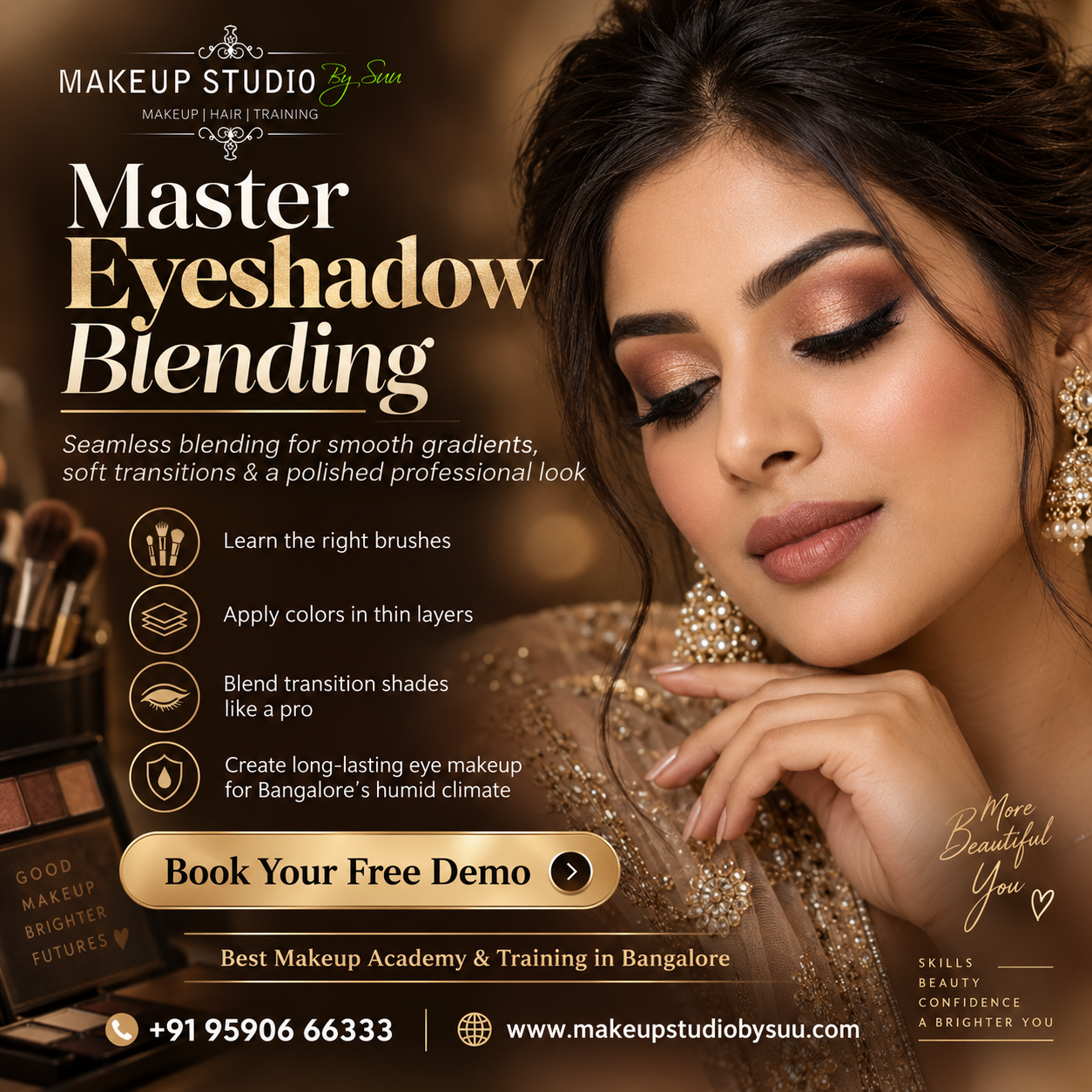
Blending eyeshadow properly is the technique of seamlessly diffusing the edges between different eyeshadow shades so that there are no harsh lines, creating a smooth gradient that enhances your eye shape. It involves using the right brushes, applying colors in thin layers, and using a windshield-wiper motion to soften transitions, resulting in a professional, polished look that lasts all day in Bangalore’s humid climate.
Blending is the difference between a ‘blob’ of color and a beautiful, dimensional eye look. When you blend, you’re not just mixing colors; you’re creating depth, shape, and a soft-focus effect that makes your eyes appear larger and more defined. In a city like Bangalore, where you might go from an air-conditioned office to an outdoor event in the same day, properly blended eyeshadow ensures that it doesn’t look patchy or melt into creases as the day goes on.
Blending is the act of using a brush (or your finger) to work the edges of eyeshadow so that each shade melts into the next without a noticeable boundary. It’s like using an airbrush effect on your skin – it creates a soft transition that mimics natural shadow and light.
Your brush is your most important tool. Here’s a quick cheat sheet:
| Brush Type | Best For | Tip |
|---|---|---|
| Fluffy blending brush (e.g., MAC 217) | Crease blending, diffusing edges | Use a light hand – you can always add more. |
| Pencil brush | Lower lash line and outer V | Keeps color concentrated. |
| Flat shader brush | Packing on color before blending | Pat – don’t swipe – to apply. |
If you’re in Indiranagar or Koramangala, these brushes are easily available at Nykaa or MAC stores. A good synthetic brush is fine for creams, but natural hair (like goat or squirrel) is best for powder blending.
Before you even dip a brush into eyeshadow, you need a smooth canvas. Use an eyeshadow primer – even if you have oily lids (common in Bangalore’s humidity). A primer prevents creasing and gives the powder something to grip onto, making blending much easier. For a quick method, you can dab a concealer on your lids and set with translucent powder, but a primer is best.
Begin with a ‘transition’ shade – a color that’s slightly deeper than your skin tone (like a matte beige, light brown, or mauve). Apply this with a fluffy brush into your crease using a back-and-forth motion. This creates a ‘base’ for other colors to blend into, making the final result look soft. For Indian skin tones, choose warm browns or terracotta to avoid ashiness.
Now, take your main eyeshadow (the one you want on the lid) with a flat brush and “pat” it onto the center of your lid. Don’t swipe – swiping moves the powder and makes it patchy. Once applied, go back in with your clean fluffy brush and gently blend the edges where the lid color meets the crease color. Use small, circular motions until there’s no line.
For dimension, add a darker shade to the outer corner (outer V) – like a deep brown or taupe. With a pencil brush, apply it at the outer corner of your eye in a small ‘<‘ shape, then use your blending brush to melt it into the crease and lid. Be careful not to over-apply; go slowly and build up.
You’ll know you’re done when you can’t see a distinct edge between shades – just a smooth transition. If you’re using mattes, they naturally blend easier; shimmers are trickier and need less blending to avoid losing their shine. Typically, each shade transition needs about 30 seconds of gentle blending.
Many Bangalore women have hooded eyes where the crease is not very defined. In that case, place your crease color slightly above your natural crease, so it’s visible when your eyes are open. For deep-set eyes, use lighter shades on the lid to bring them forward, and blend your crease shade less upward. The key is to test with your eye open in a mirror.
Bangalore has a relatively temperate climate but is quite humid, especially during the monsoon. Humidity can make eyeshadows cake or blend poorly. To avoid this:
– Use a mattifying primer and set your base with powder.
– Work in small, controlled amounts of product.
– If you’re going to be outdoors (like at a terrace wedding in Whitefield), use cream shadows that are then set with powder – they blend easier and stay put.
Absolutely. With rich melanin, we need to avoid shades that look chalky or grey. Stick to pigments with enough chroma – like warm rusts, coppers, and deep berries. When blending, it’s often more forgiving to use a ‘less is more’ approach. Also, blend with your finger for a quick touch-up: the heat of your finger melts the powder and helps it meld instantly.
– Office (Koramangala startup): Keep it to a single matte shade – just blend the edges well.
– Friend’s wedding (MG Road banquet): You’ll have time for a full 5-color blend; practice before.
– Pongal celebration at home: Go for shimmer but blend with a halo eye technique for a festive look.
Patchiness usually happens due to a dry or oily base. Make sure your primer is set, and use a fluffy brush with a light hand. If it’s still patchy, your eyeshadow formula might be low-quality – invest in pigmented brands like Huda Beauty or Sugasmelt (available at Devaraja Market and online).
If you’ve blended too much and the color looks muddy, take a clean fluffy brush with a tiny bit of your skin-tone powder and sweep it over the area to lighten it. Alternatively, add a fresh pop of color in the center of the lid.
Yes, for quick looks. Cream formulas blend beautifully with fingertips. For powder, a brush gives a more precise seep. But if you’re on a flight from Bangalore to Mumbai, fingers can save you – just use clean hands and pat, not rub.
Matte eyeshadows are easiest to blend because they have no shimmer to disturb. Satin finishes are also forgiving. Shimmer needs gentle patting instead of sweeping because sweeping breaks the glitter and makes it fall under your eyes.
If you have oily skin, set your primer with a light dusting of translucent powder. This prevents creasing and helps the shadow blend smoother. But too much powder can make the shadow look chalky – use barely a dusting.
Remember, blending is a skill – it takes practice. But with the right tools and these techniques, you’ll soon be creating gorgeous eye looks that can handle anything from a busy day at Electronic City to a night out in Indiranagar. If you try this, tag me – I’d love to see your blends!


© 2026 Makeup Studio By Suu All Rights Reserved.
Developed & Marketed By  Seeknext