Updated October 17, 2026
“Hi Suu, I want to become a makeup artist. Can I earn well in Bangalore?” That’s the message. Almost every week. Sometimes it’s longer, sometimes it comes at midnight from someone who has just finished a long day at a job they don’t like, and the question underneath the question is always the same. Can this work actually pay my rent?
I run a studio and academy in Frazer Town. Seventeen years in this work, and I still don’t have a clean answer for that message, because the honest answer depends on you, not on Bangalore. What I do have is what I’ve watched happen, batch after batch. So let me write it down properly instead of typing the same reply forty times.
If you’re in a hurry
Year one is slow and cheap. Year two is where it turns, if you kept working through year one. The money in this city is not in Instagram followers. It is in repeat brides and referrals, and those take time to build.
Most of my students start with rates that feel embarrassing to say out loud. Two thousand for a party look, three for an engagement. In my experience, a beginner in Bangalore doing this part time might make somewhere between eight and fifteen thousand a month in the first year, and that is if she is actively hunting for work. Some months it’s four. Some months it’s zero.
That number scares people and I understand why. But look at what you’re actually selling in year one. You’re selling proof. Every face you do is a sample, every client is a possible reference, every wedding you assist at is a lesson you can’t get from a video. The first year is not a salary year. It’s a portfolio year, and the portfolio is what makes year three possible.
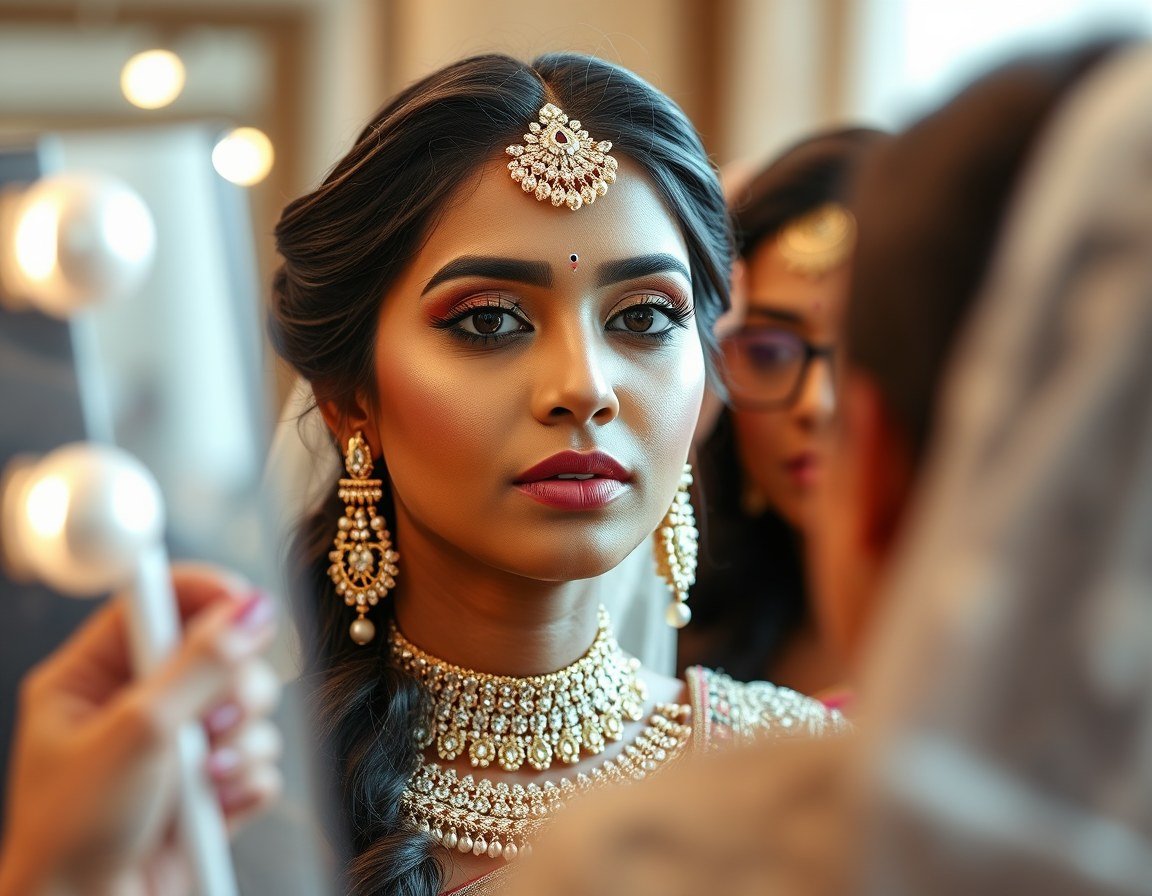
There’s also the timetable nobody mentions. Most Bangalore weddings have a muhurtham between 6am and 9am. Bridal work here means being awake at 3am, sometimes 2:30, sometimes earlier if the bride is in Whitefield and you’re crossing the city. Your friends will be asleep when you start and asleep again when you crash at noon. It’s a strange life for a while.
I tell students not to quit their job the week after the course ends. I know that’s not what most academies say, but I’ve watched too many people burn through savings in month three and then take a job they hate even more.
Here’s roughly how I think about it. Stay employed until you have a small set of repeat clients, at least a handful of brides who found you through someone else, and enough savings to cover four lean months. Not two. Four. Wedding season in Bangalore is generous and the monsoons are not.
| What you’re doing | Income in year one | What it costs you |
|---|---|---|
| Weekend work, job intact | Slow, but steady | Every Saturday gone |
| Full time from month one | Unpredictable, often low | Savings, and your nerve |
| Assisting an established artist | Small, sometimes unpaid | Your ego, and your Sundays |
| Waiting for a big break | Nothing | The year itself |
I’m biased, I run a studio, so take this as you like. But the third row is the one people skip, and it’s usually the fastest way up. Assisting pays badly and teaches quickly.
Most people skip this, but the artists I’ve watched grow in this city got there on one thing. Referrals. A bride’s cousin is getting married next season. The photographer liked how you handled a nervous mother. The family you did a small temple wedding for now has three more functions in the same year.
Instagram matters, but not in the way people imagine. It is not where brides find you. It is where they check you out after someone has already mentioned your name. If your grid is a mess of random selfies and half finished looks, the recommendation dies at that step. If it clearly shows bridal work, they message.
This is also where people ask about cost, since the phrase “affordable bridal makeup artist bangalore” gets typed into Google more than anyone admits. Honestly, affordable means different things in Frazer Town and in Koramangala. What I can tell you is that lowering your price below a certain point does not bring more brides. It brings a different kind of bride, and often a harder conversation on the wedding morning.
South Indian bridal work in Bangalore leans towards defined brows and warm tones. North Indian brides here usually ask for something cooler, more matte, different undertones. Learning to read a face and a family’s taste is half the job. If you want to see how we actually teach this in the academy, the course details are on the studio site, and the batches are small on purpose.
Start earlier in the morning than you think you need to.
Also, learn to say no to a client who argues about the price before the trial. That argument only gets bigger at 4am. And keep a record of every bride, what you used, what she said, what worked. I have notes going back years and I still read them before a big wedding. This habit is worth more than any product I own.
The other thing I’d say is that this career is lonelier than it looks from outside. You work alone for hours, you carry your own kit up three flights of stairs, and the praise goes to the dress most of the time. The artists who stay are the ones who genuinely like the quiet part of it, the sitting with a bride while she calms down.
And a limitation worth saying out loud. My course will not make you a bridal artist. It will teach you the technique and put you in front of real faces, but the bookings, the pricing, the waiting, that part is on you. Some of my students have built strong independent work. Others stopped after a year. Both are fine outcomes, and I’d rather tell you that now than sell you something else. If any of this is unclear, you can message me and ask directly.
No. A student in my last batch spent her first two weeks terrified of winged liner. By week six she was doing it on brides without a stencil. Hands learn faster than people expect. What you need is patience with yourself in the first month.
Yes, and I’d recommend it for a while. Weekends and early mornings are when most weddings happen anyway. It’s the honest path for anyone without four months of savings sitting idle.
When your hands stop shaking during a full face, and when you can finish in the time you promised. You can see more of how we structure the training over on the academy page, but readiness is a feeling you’ll recognise yourself.
The truth is there’s no clean number I can give you. There’s just the work, done again and again, until people start saying your name in rooms you’re not in. That’s when the money starts to make sense.
One bride in Whitefield changed her mind on her lip colour four times on the morning of her wedding. We went with the third one. She was right.
Written between two appointments in Frazer Town, with a kit half packed behind me and a bride’s trial at four.


© 2026 Makeup Studio By Suu All Rights Reserved.
Developed & Marketed By  Seeknext


