Last Updated: August 03, 2026
✨ Quick Answer:
Yes. A South Indian bridal makeup course is absolutely worth learning today because bridal work remains the highest-paying, most consistent segment of beauty services, and clients actively seek artists who understand South Indian aesthetics, rituals, and skin tones. The demand has not faded. It has grown and diversified.
Let me be honest with you. After 17 years of doing this, I have seen hundreds of students walk into my studio with stars in their eyes and a few misconceptions in their heads. So before you spend a single rupee, there are three realities you should sit with.
First, South Indian bridal makeup is not just about applying products. It is about understanding the bride’s skin, saree, jewellery, hairstyle, and the ceremony itself. A Kannadiga bride looks different from a Tamil or Telugu bride. Their rituals differ. Their drapes differ. The makeup must respect all of that. That is the skill you are really paying to learn.
Second, the money is genuinely good. Here is a number that might surprise you. Based on the outcomes we track at our studio, around 70% of our advanced students are booking paid bridal assignments within six months of finishing their training. The starting packages in Bangalore range from ₹10,000 to ₹15,000 per bridal booking. And that is just the beginning.
Third, the course is only the key. The door opens with your effort. I have trained 900+ students over the years. The ones who succeeded were not always the most talented. They were the most consistent. They practiced on every willing face they could find. They studied YouTube. And then they practised more.
That is the honest reality. The course is worth it. But you must walk in ready to work.
A strong foundation is not about buying the fanciest brushes or knowing every product name. It is about mastering the core skills that every bridal look depends on, and then practising them until they become muscle memory.
Let me list the non-negotiables that I drill into every single student on day one, whether they are taking our professional makeup artistry training or a shorter workshop.
These basics are not glamorous. But they are the difference between a makeup artist and someone who simply owns makeup.
“Practice makes perfect” is a half-truth. Deliberate practice makes perfect. Mindless repetition just makes you faster at making the same mistakes.
Here is what deliberate practice looks like for an aspiring bridal artist. Set a timer and complete a full bridal look within a fixed timeframe. Photograph your work from every angle. Look at the close-ups and be brutally honest about the blending. Ask someone with more experience to critique you, even if it stings. Then, do it again the next day.
At Makeup Studio by Suu, we insist on live models from the second week of our advanced courses. Students do not just practice on each other. They work on real faces with real skin issues. That is where confidence gets built. If you are learning alone, bribe your friends with free makeup sessions. It is the best investment you can make.
The jump from beginner to professional is a sequence of specific, learnable skills. You do not just “get better” over time. You actively add tools to your belt.
First is mastering skin science. You need to know why a primer works, what a setting spray actually does, and how to prep skin for different weather conditions. This knowledge lets you troubleshoot during a trial, not just follow a step-by-step checklist.
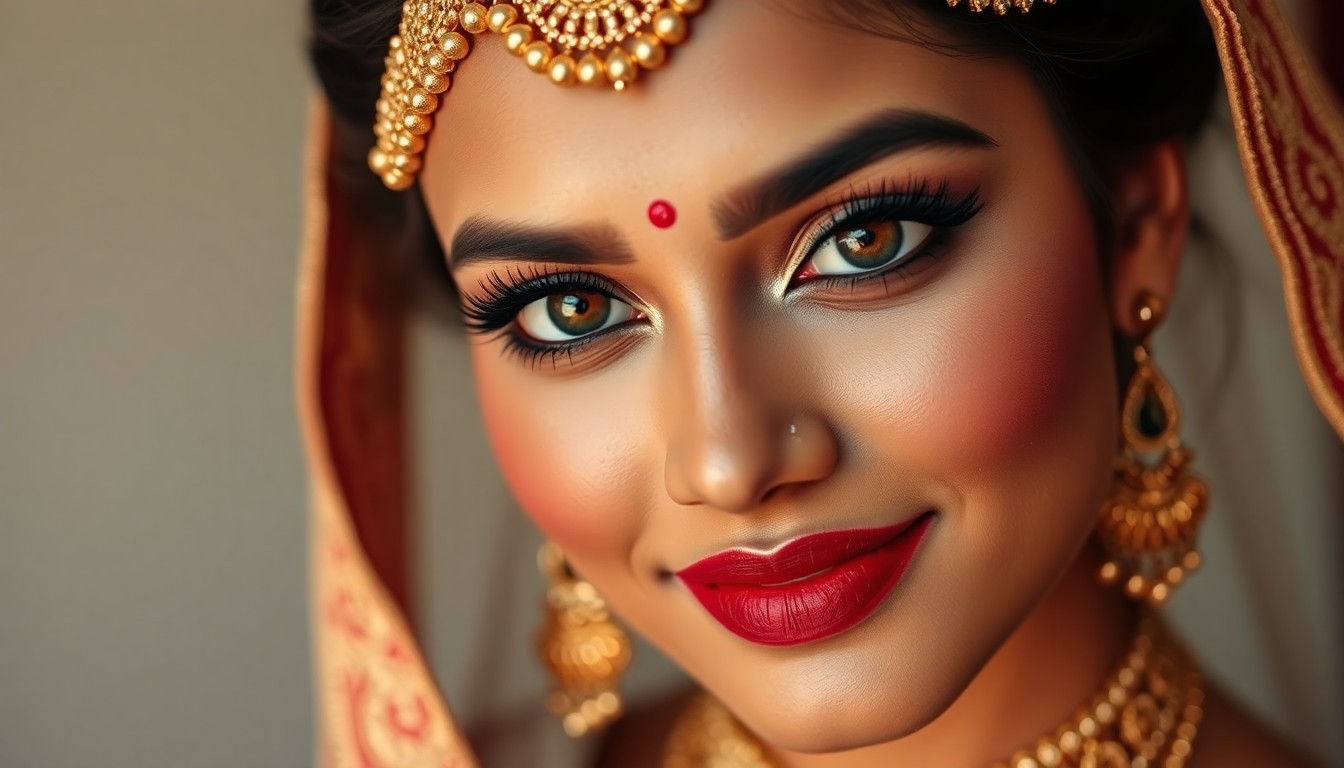
Second is the art of eyes. The eyes are the soul of South Indian bridal makeup. From the classic kohl-rimmed look to contemporary glam, you must learn multiple eye shapes, lash application, and blending styles. This is not a one-size-fits-all skill.
Third is hairstyling, or at least high-level coordination. You need to know what hairstyles work with which makeup looks. You do not need to be a certified hairstylist, but you must be able to suggest a look that pulls everything together for the photographer.
Fourth is the business of beauty. How do you communicate with a bride who is nervous? How do you price your work? How do you present your portfolio? Professionals know that 30% of this job is artistry, and 70% is client handling and reliability.
From my experience training 900+ students, I have seen that people who master these four areas transition from doing occasional party makeup to booking regular bridal clients.
YouTube is a phenomenal free resource. I encourage all my students to watch tutorials. But there is a massive difference between watching and doing. A structured course provides feedback, correction, and accountability that a screen simply cannot offer.
Here is a clear breakdown to help you decide what is right for you.
Here is the thing. I have nothing against YouTube. It got me through my early years too. But when I think about my 17 years of experience and the 1000+ brides I have worked on, I can trace my success back to the woman who corrected my hand pressure during my training. You need a mentor to see what you cannot see.
People often ask me, “Will I get work after I finish?” They want a yes or no. The real answer is more detailed, but it is a promise of a genuine path forward.
Stage one is the training period itself. This is where you build your base. You practice on 20 to 30 faces before you even think about charging money.
Stage two is the building phase. You start with family friends and referrals. You charge low rates, maybe ₹500 to ₹1,000 for party makeup, just to build your portfolio. This phase usually lasts three to six months.
Stage three is the bridal breakthrough. You book your first few bridal clients. The rates jump to ₹10,000 and beyond. This is where the real earning begins. Industry observation from our studio suggests that most students who reach 25 to 30 bridal bookings in their first two years can comfortably earn a full-time living from makeup alone.
Stage four is expansion. You might start taking on assistants, training others, or partnering with wedding planners. You might even move into airbrush makeup or HD film work. The ceiling is high.
If you are based in Bangalore and want a structured route, come and see our course details and enrolment options. We have designed them to take you through these exact stages methodically.
You will feel ready before you actually are. That is a fact. So let me give you objective markers to check yourself against.
First, can you finish a full bridal look in under 90 minutes? Yes, bridal appointments take longer on the day, but your skill level should let you work at this pace. Second, can you photograph your work and see crisp, clean edges? If you zoom into your photos and see patchiness, you are not ready. Third, can you handle a client complaint without getting defensive? That emotional maturity matters as much as your blending.
Your portfolio is your passport. It should have 15 to 20 clear, well-lit photos showing different bridal looks. If you do not have those yet, you are not ready to market yourself.
Typically, you need a focused course of one to three months coupled with consistent practice for another three to six months. In total, expect about a year from starting your first class to booking your first regular paid bridal clients. Some people are faster, some are slower. Focus on consistency, not speed.
Professional studio courses in Bangalore typically range from ₹40,000 to ₹1,50,000 depending on duration, batch size, and included material kits. Basic certificate courses are at the lower end, while advanced certification with live bridal shoots sits at the higher end. Always ask for a detailed syllabus before paying.
You can learn the theoretical concepts and watch techniques online, but mastering the practical skills is very difficult without hands-on feedback. Online courses work best for experienced makeup artists who want to learn a new style. For complete beginners, a studio environment is strongly recommended for correct skill building.
There is no single “best” style. It depends on the bride’s features, outfit, and preference. Classic looks use deep kohl eyes, defined brows, and a rich lipstick to match the saree. Contemporary looks might favour soft glam. A good course teaches you how to adapt to both traditional and modern requests.
Yes. It is one of the most reliable freelance careers in the beauty industry because weddings happen year-round. Unlike party makeup, bridal work involves advance bookings, which provide income stability. Based on our studio’s student outcomes, skilled artists in metro cities can earn between ₹50,000 and ₹1,50,000 per month at the peak of season.
Aim for at least four to five days a week while you are learning. Each session should last two to three hours. Consistency is far more effective than cramming eight hours on a Sunday. Your hands need regular repetition to build the muscle memory required for speed and precision.
Most reputable courses provide a starter kit for practice. Check your syllabus to confirm what is included. If you are joining a course that does not provide kit materials, wait until you speak with the instructor before buying expensive products. You do not want to waste money on the wrong shades or tools early on. Investing in a beginner kit is wise, but let experienced professionals guide you on what to buy.
If you are ready to explore this path further, I invite you to look at the detailed curriculum at our main makeup artistry school website. We have structured everything to help you succeed.
I have watched hundreds of women and men step into this industry with just a spark of interest. It is one of the most rewarding paths I know. Let me help you build the skills that will last you a lifetime and book those first few brides with confidence.
📞 +91 9590666333
Written by Suu
Founder, Makeup Studio by Suu | Professional Makeup Artist & Beauty Educator | 17 years of industry experience | Trained 900+ students and worked on 1000+ brides across Bangalore.


© 2026 Makeup Studio By Suu All Rights Reserved.
Developed & Marketed By  Seeknext


