Written October 2, 2026
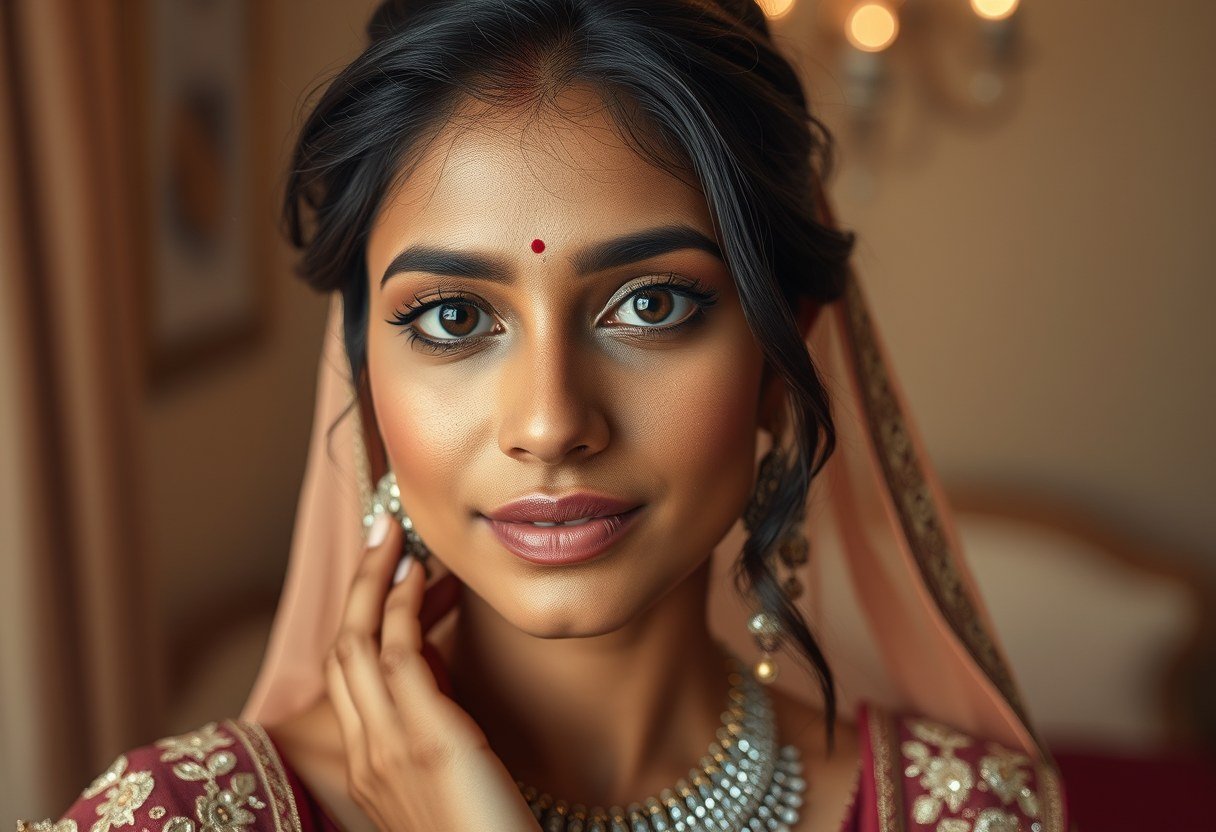
The bride was crying. Happy crying, but crying all the same. It was 6:40am in Frazer Town, the muhurtham was at 8, and my student of three months was standing there with her brush still in the air, not sure whether to keep working or step back. I told her to step back. Let the bride’s sister handle it. We had twenty minutes.
That student now runs her own bookings in Jayanagar. But three months before that morning, she was sitting in my class asking me the same question I get on WhatsApp almost every day. What does this work actually cost to learn, and what does it pay, and where do I even start if I have never touched a professional kit in my life. So let me answer that properly, without the sales pitch.
They buy the kit first.
Honestly, this happens nine times out of ten. Someone watches a few videos, decides this is what they want to do, and goes straight to a beauty supply shop or an online sale and spends fifteen, twenty thousand rupees on products they do not yet know how to use. Then they come to class, and half the kit is wrong for the work. The foundation shades are too pink for Indian skin. The brushes shed. The setting spray is for oily skin and they have dry skin.
Most people skip this, but the first thing you should learn is your own face. Not products. Your face. Where your cheekbone actually sits, how your eyelid folds when you look down, how your skin behaves at 2pm versus 8am. Products come after that. And when you do buy, start small. Commercial Street still has the best cheap brush sellers in the city if you know which lane to turn into. I send students there in the second week, not the first.
No. And I say that as someone who has trained over 900 students.
Artistic helps. It gives you an eye for colour and proportion. But bridal work is closer to craft than art. It is repetition, hygiene, timing, and reading a room. Can you keep your hand steady for forty minutes? Can you work while an aunt is asking you questions and a photographer is moving your light? Can you tell when a bride needs you to stop talking? Those things matter more than whether you can draw a perfect winged liner freehand.
I have had students who could paint beautifully on paper and froze the first time a real bride sat in front of them. I have had students who had never held a blending brush and within six months were doing clean, camera-ready work. The second group is bigger. That should tell you something.
This is where the real shift happens, and most people underestimate it.
Your own face is forgiving. You know where everything is. You can feel when something is pulling. The moment you sit in front of another person, especially a stranger, everything changes. Their skin texture is different. Their brows sit lower. They flinch when you come near the eye. They have a mole exactly where you wanted to place the highlighter.
In class, we start with each other. Students pair up. They learn to ask before they touch, to keep their station clean, to work at a pace that does not make the model anxious. This is not glamorous. It is the part that actually makes you employable. If you want to see how we structure this through the course, the studio’s training page lays it out properly.
One more thing. Bangalore weather is kind to makeup most of the year. October humidity after the rains catches new artists off guard. Base starts sliding. Blush goes patchy. If you have only ever practised on yourself in an air-conditioned room, you will not know what to do. Practise in the heat sometimes. It is uncomfortable and it teaches you more than any tutorial.
For most of my students, somewhere between three and six months of regular practice. Not three months of watching. Three months of doing, on different faces, with someone correcting you.
The first month is clumsy. The second month is slightly less clumsy. The third month something clicks and you stop thinking about which brush to pick up. That is the point you are aiming for.
But here is the honest limitation. Some people take a year. Some never get comfortable with brides and are happier doing editorial or party makeup, and that is a perfectly good outcome. This work is not for everyone. If you dislike early mornings, if you cannot handle a bride changing her mind four times on the wedding day, you will be miserable. I had a bride in Whitefield do exactly that. Four lip colours, twenty minutes before she left the house. We went with the third one. She was right, and I told her so.
I get asked about hd bridal makeup bangalore price constantly, and usually the person asking is mixing up two very different numbers. What a bride pays. What you earn. And what it costs you to learn before either of those exists.
In my experience, bridal packages in Bangalore start somewhere around fifteen to twenty thousand rupees for a newer artist and go up well past a lakh for someone with a strong portfolio and years of weddings behind them. The hd bridal makeup bangalore price you see advertised is not a fixed market rate. It is whatever that artist has decided they are worth, and it changes as their work gets better.
On the learning side, a proper bridal course in the city usually sits between thirty and eighty thousand rupees depending on duration, kit inclusion, and how much one-on-one time you get. Anyone quoting you five thousand for a full bridal module is either teaching you very little or using you as a model for their own bookings. I am biased, I run a studio, so take that with salt. But I have seen enough students come to me after a cheap course to know what it looks like.
The first year is not lucrative. You will do trials at low rates, sometimes free, to build a portfolio. You will say yes to weddings you should have said no to. That is normal.
Not legally, no. Brides book you off your portfolio and your trial, not your certificate. But a good course gives you supervised practice on real faces, which is hard to get on your own. The certificate is a side effect.
Lower than you think, but not free. Free bookings attract people who will not respect your time. Charge something small, do the work well, get photos, and raise your rate every five or six weddings until you stop getting yes too easily.
Yes, plenty of my students do. Weekends and evenings are enough if you practise consistently. What kills it is not lack of time. It is practising once every three weeks and expecting to improve.
It is a technique, not a separate product line. It means building coverage in thin layers so it reads well on camera without looking heavy in person. Some artists disagree on the terminology and that is fair, the word gets used loosely in the market.
Then you will know within two months of real practice. Not everyone is suited to bridal work. The ones who improve fastest are the ones who ask for feedback instead of defending their work.
Almost all of them are exactly that. If you want to talk through whether it suits you, message the studio directly and ask. I would rather tell you honestly than take your money and watch you struggle.
One last thing, and this is the part I actually want you to keep. That 4am muhurtham in Malleshwaram, the one where the power cut out mid-base and I finished the eyes by phone torch, the photos came out fine. Not because I am brilliant. Because by then my hands knew what to do without the lights, without the mirror, without anything. That is the whole point of starting. You are not learning products. You are building hands that work when everything else goes wrong. The work we do here is just a place to build them faster.


© 2026 Makeup Studio By Suu All Rights Reserved.
Developed & Marketed By  Seeknext


