Updated November 4, 2026
“Mam, bridal makeup course fees and bridal makeup cost in bangalore 2026, and also will I get work after?”
That’s the message. Not “hello” first. It lands on my WhatsApp at all hours, usually from someone who has been thinking about this for months and has finally decided to type it out. I understand the rush. You want a number before you commit your time and money.
But here’s the thing I’ve learned after 17 years of running a studio and academy in Frazer Town. The number is not really what you’re asking. You’re asking whether this will work out for you. So let me answer that instead, through the people who’ve already sat where you’re sitting.
If you want the honest shape of it
Costs in Bangalore for bridal training in 2026 sit in a wide range depending on the course length and what’s included. What matters more than the figure is what you leave with, and whether anyone taught you how to actually get clients.
Early in my teaching years, a student walked in with a foundation bottle two shades lighter than her own skin. She was planning to use it on a model that day. I asked the batch to show me their own foundation bottles. Half the room had done the same thing. Half.
That day became the first lesson of every batch since. We match foundation on the jawline, in daylight, before anything else happens. It sounds small. But most of the brides I’ve worked on over the years had a previous trial somewhere that left them looking grey in photos. It starts with a wrong shade.
Most people skip this, but the base is the whole thing. Everything you do after it either sits on a good base or fights a bad one.
The first is a girl who joined straight out of college. She had no contacts, no Instagram following, nothing. She assisted me on weddings for months, mostly carrying my kit and watching. That’s not glamorous work. But she watched how a bride’s mother talks to you at 4am, how you fix a tear in a silk saree pallu, how you keep your voice calm when the muhurtham is running late. She now handles her own brides, and when she calls me it’s usually to ask about a colour correction, not about pricing.
The second was a woman in her late thirties. She had a salaried job, a family, and very little free time. She did the course slowly, took longer than the batch, and almost dropped out twice. She does bridal work on weekends now while keeping her job. Not full time. She’s fine with that.
The third was a student who finished the course and did nothing with it for a year. That happens too, and I’d rather say it here than pretend every batch is a success story. She came back later, re-did the practical sessions, and started small with family weddings. She’s still building. Some people need to grow into it.
I get a lot of students in their thirties and forties. Some are tired of office work. Some have raised children and now want something of their own. Look, I’m biased, I run a studio, but I think they often do better than the younger students on the client side.
Why? A 24 year old can learn a cut crease faster. A 40 year old knows how to calm a nervous bride. She knows how to handle a mother who wants everything done differently, and how to hold a schedule. That skill is not in any textbook. Brides pay for it.
The honest limitation is stamina and time. Weddings here are not a 9 to 5. Most Bangalore weddings have a muhurtham between 6am and 9am, which means bridal work here starts at 3am. Sometimes earlier. If you have young children and no support at home, that’s a real constraint, and no course fee structure changes it. You need to plan around it.
This is the part nobody puts on a brochure. You reach the venue in the dark. The bride is tired and slightly scared. The lighting in the room is a single yellow bulb, not the ring light in your classroom. You have ninety minutes and seven people asking you questions.
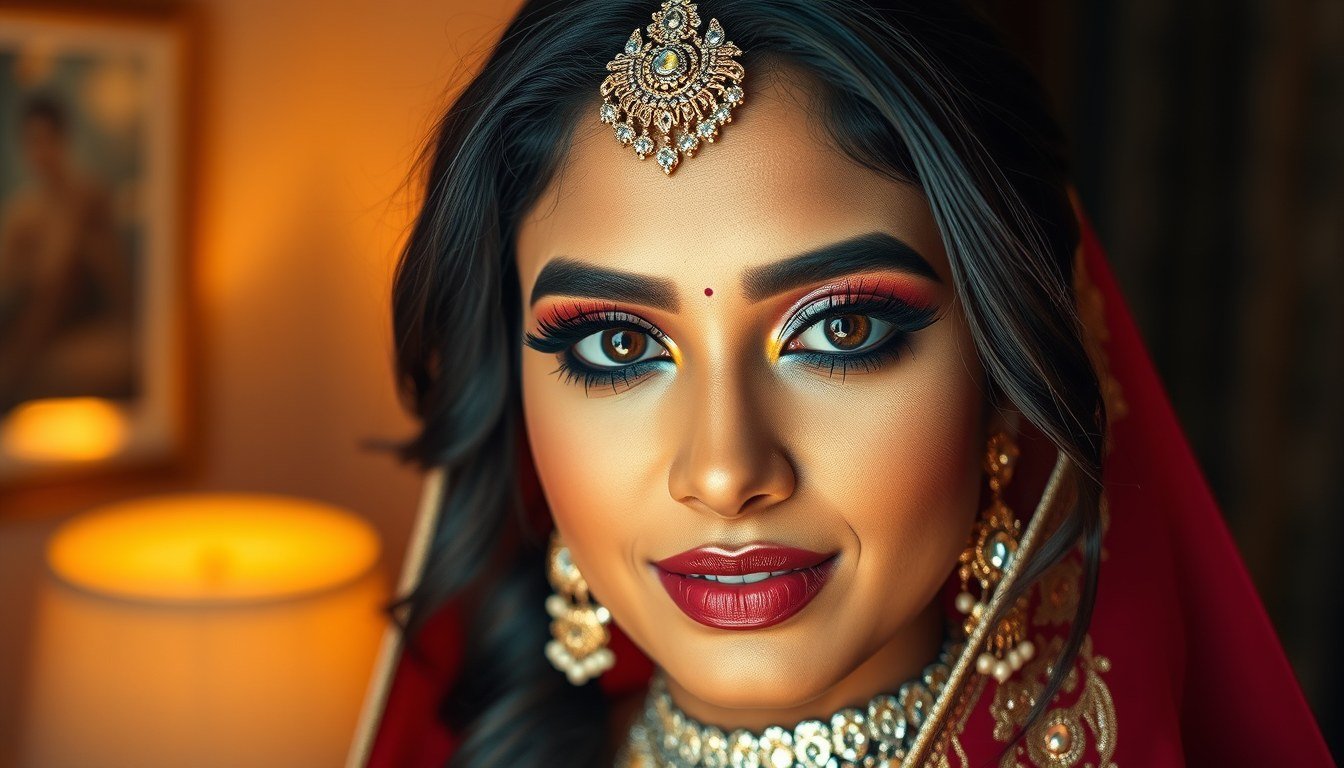
South Indian bridal work in Bangalore leans towards defined brows and warm tones, golds and terracottas that sit well with kanjeevaram silk. North Indian brides here usually ask for something cooler, more neutral, sometimes with a softer lip. Both are correct for the person in front of you. Your job is to listen before you open your kit.
Some artists disagree, and that’s fair, but I’ve found that a bride remembers how you made her feel in that dark room more than she remembers the exact eyeshadow. She remembers whether you were steady.
You cannot wait until you feel ready. Ready doesn’t arrive on its own. Start photographing your work on day one of the practical sessions, in natural light near a window, no filters. A clean photo of a well-matched base on a real face is worth more than fifty edited pictures of a mannequin.
Assist first. Assist your teacher, assist seniors, assist anyone who’ll have you. Carry the kit, watch the timing, note how much time each step actually takes. Students who do this for even three or four weddings come out with a portfolio and a sense of how a real morning runs. Students who only practise in class learn the technique and then freeze on their first paid bride.
One mother and daughter enrolled in the same batch a few years ago. The mother finished with the better portfolio. Cleaner blending, more careful photos. The daughter still hears about it at every family function. I won’t name them, they’d know who they are.
When people ask about bridal makeup cost in bangalore 2026, they’re usually comparing course fees across studios. That’s a fair habit. Just know that fees vary because what’s included varies. Kit material, number of live models, whether you assist on real weddings, how long the practical sessions run. Compare those, not just the total.
On the earnings side, with my students, bridal charges range widely depending on experience, kit, and the kind of weddings they take. Newer artists start lower to build a client base. Some stay there. Those who assist seriously and photograph well tend to move up faster. That’s the pattern I’ve watched, not a guarantee for anyone.
You can see how the course is structured on Makeup Studio by Suu if you’d like the specifics.
Some do, some take months. It depends on how much you assist and how visible your work is. Nobody can promise you bookings, and I’d be careful of anyone who does.
No. Come with the basics and learn what you actually use. Buying a full kit before you’ve matched a single foundation is how money gets wasted. We’ll go through it slowly.
The course teaches you the technique. Bridal specifically needs practice on real skin, real nerves, real early mornings. Plan to assist for a while. That’s where the course turns into a career.
If any of this sounds like where you are right now, you can message me and we’ll talk it through properly.
The one thing I’d want you to remember: the fee is the smallest part of the decision. What you’re really buying is the time someone spends correcting your hand, your shade matching, your speed, and your nerves on a real wedding morning. Choose the place where that time is actually given. Everything else follows.


© 2026 Makeup Studio By Suu All Rights Reserved.
Developed & Marketed By  Seeknext


