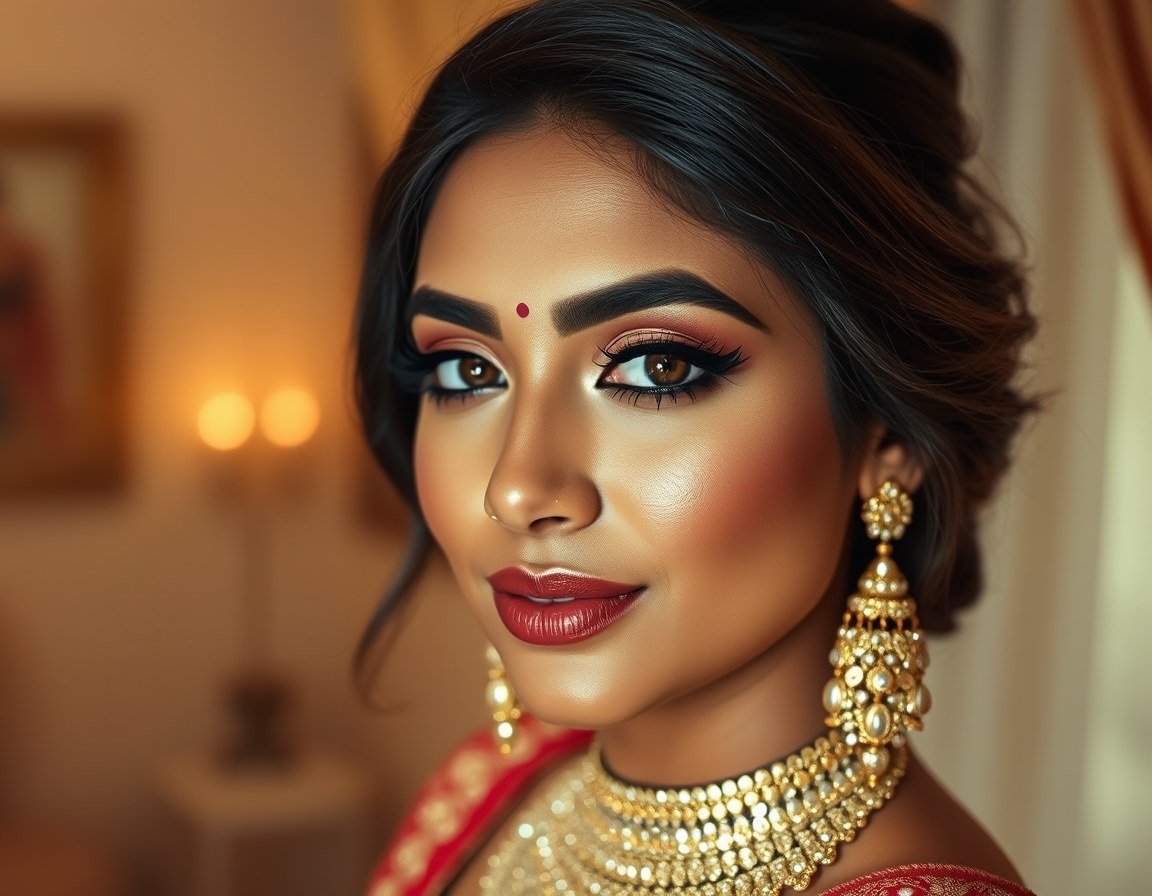
Updated November 3, 2026
The bride’s mother kept apologising for the power. It was a 4am muhurtham in Malleshwaram, and mid-base the lights went. I finished the eyes by phone torch. Nobody at that wedding knew, and the photos came out fine, but I remember thinking: a studio would have had a backup. A freelancer standing there alone has to be the backup.
That morning is a decent way into this subject, actually. Students ask me constantly whether they should go freelance or work through a studio, and I’ve now watched several hundred people make that choice in real time. So let me tell you what I saw instead of what I think.
It is not talent, mostly. I’ve taught people with beautiful hands who never booked a single client, and people who were frankly average in class who now run full calendars.
The ones who make it share something quieter. They finish things. They show up early. They send the follow-up message the day after the trial instead of waiting for the bride to call. They keep a small book with every client’s name, shade, and what they said they hated about their last makeup. Honestly, that notebook is worth more than any certificate.
The other thing they share is patience with the boring part. The first two years involve a lot of waiting around, a lot of unpaid trials, and a lot of weddings where you are the second artist in the room. People who accept that phase and keep going end up fine. People who expect the phone to ring after one Instagram post of a class certificate usually quit by month four.
Most discussions of freelance makeup artist vs studio bangalore get stuck on money. Money is real but it is not the whole picture, so here is the version I give students who sit in front of me looking confused.
| What you give | Freelance | Studio work |
|---|---|---|
| Kit and products | Your own, out of your pocket | Often shared, sometimes provided |
| Travel and setup | Everywhere, at your own cost | Mostly fixed, you arrive and work |
| Clients | You find them, you keep them | The studio brings them to you |
| Learning curve | Steep and fast, mistakes are yours | Slower, someone corrects you |
| Income | Uneven, but the ceiling is yours | Steadier, usually a split |
Neither column is better. I’m biased, I run a studio, so weigh my view accordingly. But I’ve also seen what a bad freelance start does to a person’s confidence, and I’ve seen what years of studio work can do to someone’s ambition if they get too comfortable.
A homemaker from Koramangala joined one of my batches at 41. She told me at the door she was too old, that nobody would book a face like hers. She now takes weekend bookings and turns work away. I am not exaggerating that, I’ve seen her messages.
Why does it work for some people at that age? Because brides’ mothers trust them. Because they have handled a crisis before, and a wedding morning is one long crisis management exercise. Because they don’t flinch when a hall is late, or a cousin is rude, or the muhurtham shifts by an hour.
What doesn’t work is pretending the physical side isn’t hard. Long days, heavy kit bags, early alarms. Some of my older students do two bookings a month and are happy. Some want five a week and burn out in a year. Both choices are fine, but please be honest with yourself about which one you want before you spend on a full kit.
Almost never through Instagram. I want to be clear about that because the internet tells a different story. With my students, the first paid booking usually comes from a cousin, a neighbour, a colleague’s sister, or a bride who saw your work at someone else’s wedding and asked for your number.
The second booking is the one that matters. The first can be luck. The second means the first client told someone you were good.
This is where the studio route and the freelance route diverge most sharply. A studio hands you clients who already trust the name on the door. Freelance means you build that trust one face at a time. Slower, but it’s yours. This is also where the freelance makeup artist vs studio bangalore question stops being theoretical and becomes a calendar.
One small thing I’ve learned about Bangalore specifically. Reception makeup here runs heavier than the morning look because of hall lighting, all those warm yellow lights that flatten a face. Brides rarely believe me until they see the photos from a friend’s reception and notice how washed out everyone looks. Then they call back and say yes, do the heavier base.
Here is the honest part. Any course, mine included, teaches you technique and hygiene and how to read a face. It does not teach you how to price yourself without apologising. It does not teach you how to say no to a bride who wants five looks in one hour. Those come later, usually through a few painful bookings.
Some students finish and are ready to freelance in a month. Others need a year of assisting before they feel steady. I can’t tell you at the door which one you’ll be. Nobody can.
Frazer Town on a Sunday morning is quiet enough that I take my early trial appointments then. No traffic noise, no rush, the bride can sit for two hours and we can argue about her base in peace. Small thing. It matters more than it sounds.
If you want to see how the studio and academy actually run day to day, the Makeup Studio by Suu page has the details, and you can also just message me if you’d rather talk it through before deciding anything.
Some do. Most take a few months to get steady. Start with people you already know, do a few trials at low or no cost, and keep notes on every face. The clients follow the notes, not the certificate.
Often yes, because someone else handles the client and you focus on the makeup. The trade is that you earn a split and someone else’s name is on the door. Fine for a year. Some artists stay forever and love it, and that’s fair too.
I won’t give you a number because it depends on your kit, your travel, and your city area. In my experience, new artists charge too little and then resent the work. Pick a range you can survive on without feeling bitter, and raise it after every five good bookings.
Many of my students did exactly that for the first year. Weekends and early mornings, mostly. It’s tiring but it lets you test the work before you leave anything stable. That’s a sensible order, in my opinion.
So that’s the long version of what I tell students over coffee. Freelance or studio is not a personality type, it’s a season of your working life, and it can change. The people I worry about are the ones who never decide and keep paying for more classes instead. The people I don’t worry about are the ones who finish, book one face, and see how it feels.
If something here doesn’t match what you’ve been told elsewhere, ask me. I’m on WhatsApp between appointments, usually with someone’s base half done.
Suu
I run Makeup Studio by Suu, a studio and academy in Frazer Town, Bangalore. 17 years of professional work, and most of what I know about this career came from the students who sat in my chair learning it.


© 2026 Makeup Studio By Suu All Rights Reserved.
Developed & Marketed By  Seeknext


