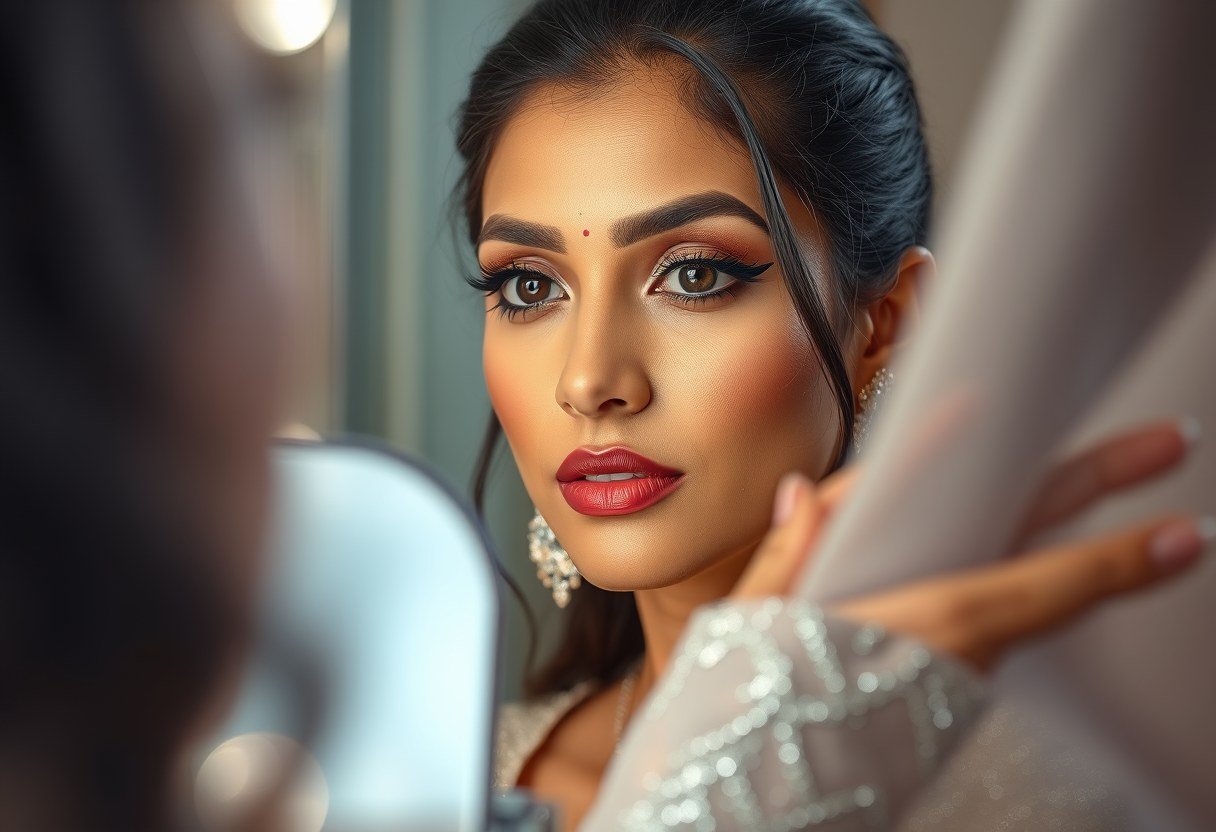
I’m writing this between a 2 pm trial and a 5 pm client, and my table still has a half-swept dusting of loose powder on it from the morning batch. One of my students from last year just sent a photo from a wedding she did in Mysore. She was the girl who once sat in the corner of my class and asked me, very seriously, whether it was too late for her to become a makeup artist at twenty-eight. I’ll get to her later. First, let me tell you what the first weeks of this work actually look like, because I think that’s the part nobody talks about honestly.
The short of it
Every batch has people who struggle in week three and people who take to it fast, and both kinds go on to do good work. What separates them isn’t talent. It’s who keeps showing up and who builds a portfolio before they feel ready.
Last batch, one student spent her first two weeks genuinely scared of winged liner. Not exaggerating. Her hands would shake a little when she picked up the brush, and she’d wipe it off and start again, and then wipe it off again. By week six she was doing that same wing on brides without a stencil, faster than most of the room. She didn’t have a magic moment. She just did it badly for a few more days than the person next to her.
I see this every batch. Week three is where the doubt sets in, where people start comparing themselves to the fastest hands in the room. Here’s what I tell them, and I mean it: nobody remembers your first month. The brides you’ll work on later care about how you handle the final look, not how long it took you to get there in a classroom.
A good number of my students are not twenty-two. They’re people who ran a business, or taught school, or managed a team, and now want to do something with their hands. Honestly, they often settle faster than the younger ones. They’ve already dealt with difficult people and tight deadlines. A bride having a small meltdown at 6 am doesn’t rattle them the way it might rattle someone who’s only ever handled a classroom demo.
What they do struggle with is the learning curve of the technique itself. Fine motor work takes repetition, and there’s no shortcut. I’m biased, I run a studio, but I’d argue that maturity is worth more here than people think. Some artists disagree, and that’s fair, but my older students have consistently surprised me with how quickly they build trust with clients.
It’s rarely the most naturally gifted hands. The ones who do well tend to be the ones who practice outside class hours, even if it’s just on a friend’s face on a Sunday. They take notes on the shades they get wrong. They ask why a foundation oxidised rather than just fixing it and moving on.
There’s also a practical honesty here. Some people finish the course and discover they don’t actually enjoy bridal work, and prefer editorial or events. That’s not a failure. The course can only take you so far. It gives you the technique and the confidence, but it can’t tell you what kind of artist you’ll enjoy being. You find that out in the field, and that’s normal.
Most people skip this, but the photos you take during the course matter more than the certificate at the end. I tell every batch to shoot their practice looks properly, even on a phone, with decent light. A bride searching for a celebrity style makeup artist bangalore based is scrolling through images before she ever reads a word about you. If your portfolio is three blurry photos, she won’t stop scrolling.
Half my bridal enquiries now come through WhatsApp forwards from past brides, not Instagram. That’s worth sitting with. It means the work speaks in private messages between people who trust each other, and your early portfolio is what gets forwarded. Build it as you learn, not after.
The girl from Mysore, the one who thought thirty was too late, now does bridal almost every weekend and has a small team assisting her. Another student, closer to forty, took the skills straight into film and ad shoots, partly because she already had contacts from her old job. A third finished the course, did a handful of weddings, and then decided she preferred teaching makeup to doing it, so she now runs workshops in her neighbourhood. Three outcomes, none of them identical, and none of them what I would have predicted on day one.
This is the part where I’ll be honest about the work itself. Reception makeup in Bangalore runs heavier than the morning look because of hall lighting. Brides rarely believe me until they see the photos, and then it clicks. Some students get frustrated in the early weeks that the technique feels slow and the money doesn’t come quickly. That’s real, and I won’t pretend otherwise. It takes time to build a client base, and the course gets you ready for the work, not instantly booked.
There’s also the matter of the shade mistake, which I keep coming back to. A student once brought the wrong shade of foundation for her own skin to class. Half the batch had done the same thing. That became my first lesson for every batch since. It’s a small, unglamorous habit, but it’s the kind of thing that separates someone who looks like a celebrity style makeup artist bangalore clients trust from someone who just has good brushes.
If you want to see how the classes are actually structured, the studio’s contact page has the details. I’d rather you read it and ask me honest questions than sign up on a whim.
The people who make it in this work are not the most talented ones in the room. They’re the ones who keep showing up through the awkward weeks, take their own mistakes seriously, and build a portfolio before they feel ready. That’s it. That’s the whole secret.


© 2026 Makeup Studio By Suu All Rights Reserved.
Developed & Marketed By  Seeknext


