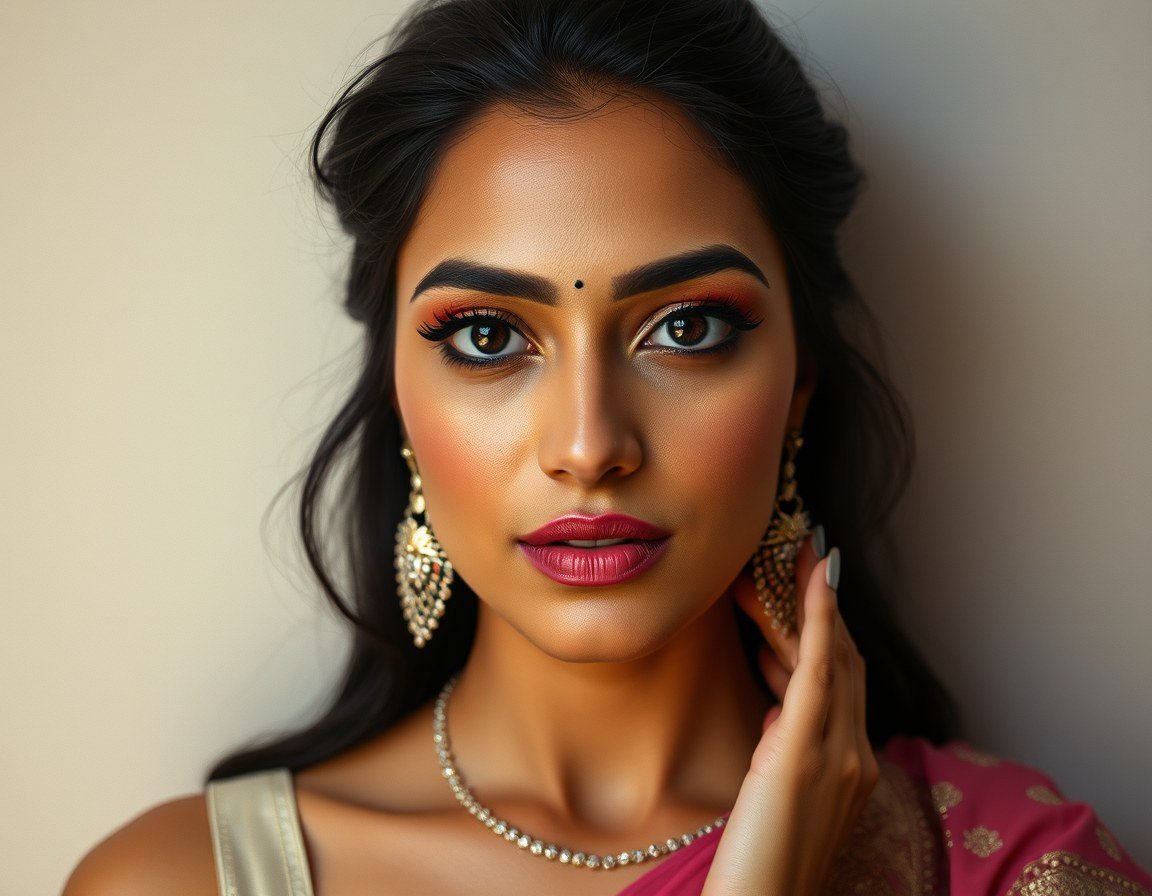
I sat down to write this with half a cup of cold coffee next to me and a brow pencil still in my hand. The 10am bride had just left, her sister was booking a trial for December, and I had exactly forty minutes before the next appointment walked in. So this is going to sound like me talking, because it is me talking.
People ask me all the time about becoming a sangeet makeup artist in Bangalore. They ask about fees, about kit costs, about whether the work exists. Rarely does anyone ask the better question, which is what actually happens to the students after the course ends. So I thought I would answer that one instead.
If you’re in a hurry
Most students who finish and keep practising find work within a few months, usually through a cousin’s wedding, then a friend’s, then a referral. Nobody gets there in a straight line. The ones who stay are the ones who kept showing up when the first month felt clumsy.
The first one came to me at nineteen, straight out of a degree she did not want. She now does sangeet makeup artist bangalore work almost every weekend during wedding season, mostly through a planner who found her on Instagram. She still calls me before big bookings. Not for technique. Just to say the bride seems nervous.
The second was a software engineer who wanted a side income and got one, but slowly. She does four or five events a month and has no plans to quit her job. That is a perfectly good outcome and I wish more people treated it as one.
The third did the course, worked two weddings, and stopped. Her reason was honest. She liked makeup, she did not like standing on her feet for nine hours with a bride’s mother watching her every stroke. I respect that more than someone who drags it out for years pretending to enjoy it.
It is not talent. I have taught genuinely gifted hands that never worked a single paid event, and average ones who are now booked out three months ahead.
What they share is boring. They practise on real faces, not cushions. They learn to read a room. They turn up early. Most people skip this, but the single biggest skill in bridal work is not blending. It is managing a bride’s anxiety at 5am while her aunt gives unsolicited opinions from the doorway.
South Indian bridal work in Bangalore leans towards defined brows and warm tones, golds, coppers, deep reds. North Indian brides here usually ask for something cooler, more mauve, softer contour. You have to be fluent in both, sometimes on the same weekend. And most weddings in this city run a 6am to 9am muhurtham window, which means bridal work here is a 3am job. If you cannot wake up at 2:45 and still be steady with a liner, this career will exhaust you fast.
Almost never from advertising. With my students, the first booking is nearly always a cousin, a colleague, or a friend’s sister who saw them do their own face at a function. Somebody says yes to a small amount, and the student panics for a week before.
In my experience that first amount is usually modest. A few thousand for a sangeet, more for a full bridal. It climbs with referrals, not with time. I am biased, I run a studio, but I think the referral habit is the actual product you are building.
One bride in Whitefield changed her mind on lip colour four times on the morning of her wedding. We went with the third one. She was right, and I would have picked it too if she had let me speak. That morning taught me something I now pass on to every batch. Listen to the bride, then quietly do the better thing if she gives you room.
These are my favourite students, honestly. They arrive with a mortgage, a child, and no time to waste. They ask sharper questions and take better notes.
What they struggle with is comparison. A twenty-two year old has years to build slowly. A forty year old feels like the clock is unfair. I tell them the same thing every batch. Your first client does not care how old you are. She cares whether her base still looks like skin at 8pm.
Some artists disagree with me on this, and that’s fair. Not everyone needs to work weddings. Some of my older students now do only party makeup and teaching, and they are happier for it.
A student last batch spent her first two weeks terrified of winged liner. Two weeks of smudged, shaky, uneven wings. She cried in the washroom once, which she thinks I did not notice, and I did. By week six she was doing it on brides without a stencil, and doing it faster than me on a bad day.
Nothing changed except repetition. That is the whole secret and it is a deeply unsatisfying answer for anyone looking for a shortcut.
Here is the honest limitation of what we teach. The certificate does not get you work. My studio name on your Instagram bio does not get you work either, not after the first few bookings. What gets you work is a face you have done well, photographed properly, and a person willing to say your name to someone else. The course gives you technique and a place to make mistakes cheaply. It cannot hand you a client list. Anyone promising that is selling you something else.
If you want to see how the batches actually run, the academy programme is laid out properly there. And if you would rather just talk it through before committing to anything, message me and I will reply between clients, probably at midnight.
Next week’s batch is on reception hairstyling and quick sangeet changes, the fifteen minute switch from a dupatta look to something lighter for the dance floor. That fifteen minutes is where most students first feel like professionals. Everything before it is just preparation.


© 2026 Makeup Studio By Suu All Rights Reserved.
Developed & Marketed By  Seeknext


