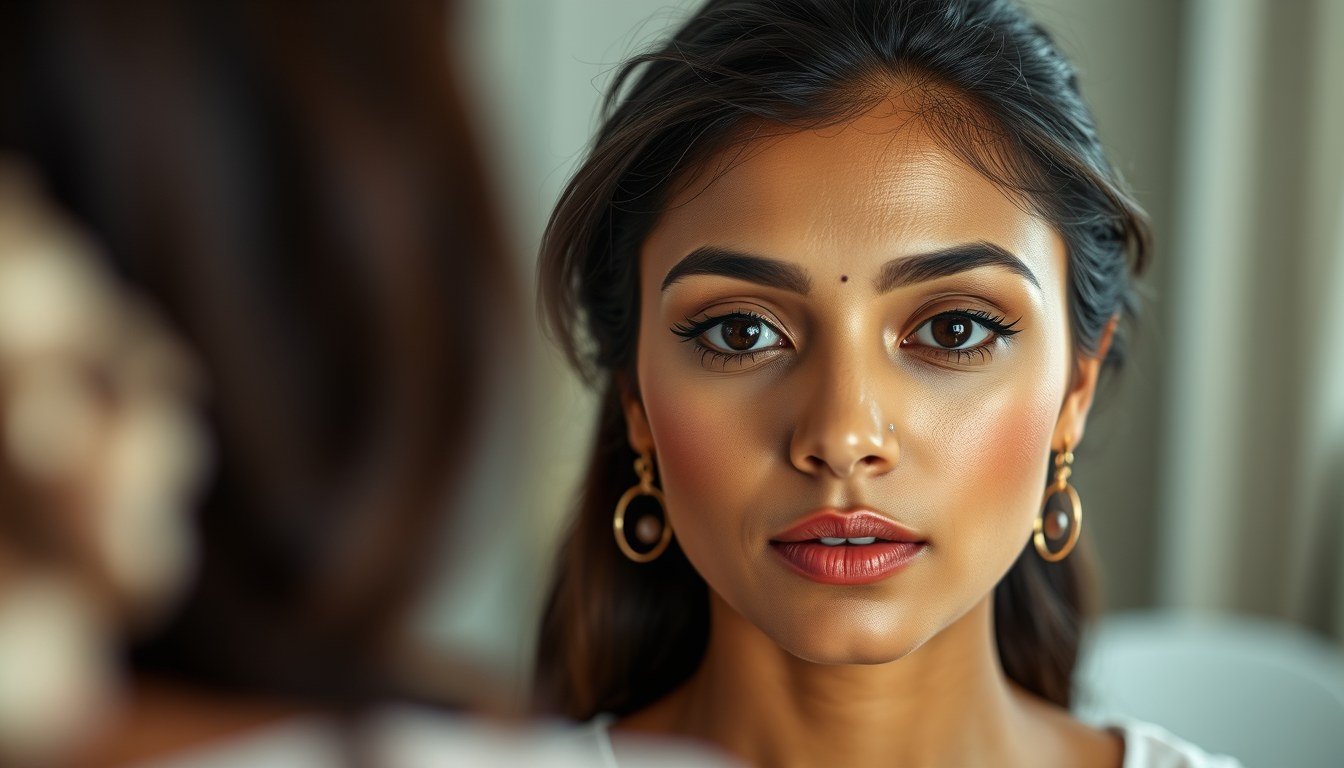
Last month a bride in Whitefield changed her mind about her lip colour four times. On the wedding morning. We went with the third one she picked. She was right, by the way, and I have stopped pretending I know better than a bride on her own wedding day.
But that morning is not what this piece is about. This is about the phone calls I get from people who want to do this work and have never held a proper brush in their life. They ask the same thing in different words. Where do I even start.
If you’re in a hurry
You start with clean hands, a small kit, and the willingness to be bad at this for a few weeks. Nobody walks into a first class already good. The ones who make it are simply the ones who keep showing up.
This is the question I get most, and I always answer it honestly even when the answer is not what the person wants to hear. It takes about six to eight weeks of regular practice before your hands stop shaking. Not talent. Just repetition.
I had a student last batch who spent her first two weeks terrified of winged liner. Two weeks of shaky lines on paper, on her own eyes, on anyone who would sit still. By week six she was doing wings on brides without a stencil. Nothing changed except she stopped avoiding the thing that scared her.
Honestly, the timeline depends less on skill and more on how many faces you touch. Someone who practises on three people a week will always move faster than someone who practises alone in front of a mirror.
Less than you think. Most beginners show up with a bag full of things they bought after watching videos, and half of it never gets used. You need a basic set of brushes, a primer, a foundation that matches one skin tone, a neutral palette, and a kajal. That is enough to start learning technique.
Do not spend your savings on a kit before anyone has taught you what goes where. I have seen students buy a full professional setup, then discover in week one that they do not know how to hold a blending brush. That is a very expensive way to find out.
One more thing. Bring a notebook. Your memory is worse than you think when someone is talking fast and demonstrating at the same time.
No. I know that sounds like something a studio owner would say to fill seats, and I am biased, I run a studio. But I have seen too many people walk in saying they cannot draw a straight line, and walk out doing clean bridal work. Bridal is not art in the way people imagine. It is craft.
What it does need is patience and a good eye for skin tone. That eye can be trained. You learn which undertone needs warmth and which needs something cooler, and after a while you stop guessing and start seeing.
They rush. Every single one of them. A bride sitting in front of you does not want to see you panic, and panic always looks like speed. Slow hands read as confidence, even when you are not confident.
The second mistake is trying to copy looks from photos without understanding the face underneath. South Indian bridal work in Bangalore leans towards defined brows and warm tones. North Indian brides here usually ask for something cooler. If you learn to read faces first and looks second, you will get this right far more often.
Most people skip this, but the biggest mistake is not asking questions during class. I can only correct what I can see.
They practise on real faces within the first week. Not mirrors. Not their own eyelids only. Real people, who sit still and give honest feedback and sometimes say the lip colour looks wrong.
I started doing this work 17 years ago, and back then I had exactly nobody to practise on except relatives who were too polite to say no. It made me better faster than any class could have. The people who learn quickly are not more gifted. They simply find faces faster.
One honest limitation of any course, mine included. A classroom can teach you technique, timing, and how to handle a nervous bride. It cannot give you the years of small mistakes that turn a good artist into a reliable one. That part is on you, and it takes longer than the course lasts.
Yes, plenty of my students do. The ones who manage it well block out fixed practice hours every week, and they treat those hours like a second job. Weekend batches fill up fastest for exactly this reason, so plan ahead if that is your situation.
From what I see with my students, a beginner might start somewhere in the low thousands per bride, while experienced artists charge several times that for a wedding day. It moves with your portfolio and your speed, not with the number of certificates on your wall. Some artists disagree with how slowly I tell students to raise their rates, and that is fair.
Some do within weeks, some take months. It depends on how much you put yourself out there, and whether you are willing to start with smaller bookings. I have trained 900+ students and the pattern is clear. The ones who ask for work keep getting it.
If you want to see how the batches are structured or where the studio sits, you can look at how classes run here. If you would rather just talk it through first, reach out to us here.
Frazer Town is quiet on a Sunday morning, quiet enough that I take my early trial appointments then. Last Sunday a bride sat in my chair with tea going cold beside her while we tested three foundation shades on her jaw in daylight. That is the whole job, really. Small decisions, made slowly, on someone else’s most important morning.
Next week my current batch starts working on full bridal looks with dupatta setting and jewellery placement. They are nervous about it. They were nervous about liner too. Look at them now.


© 2026 Makeup Studio By Suu All Rights Reserved.
Developed & Marketed By  Seeknext


